Saturday, June 5, 2010
Brainerd House - 107 S. Douglas
In a previous entry I wrote about the Sangamon County Farigrounds. In 1865, 2 lots of the fair grounds were sold to Gideon R. Brainerd by the Sangamon County Agricultural Society. On those lots Mr. Brainerd built a lavish home soon after. Mr. Brainerd was an early officer of Marine Bank.
In 1932, a group of Civil War Veterans met in the dining room of the house.
The home has passed through many hands and now is made up of several apartments.
Friday, June 4, 2010
Washington Park Bandstand
The Bandstand was built in 1926 and was funded mostly by donations.
Lehman had directed the Illinois Watch Company band for over forty years and selected this park site for the bandstand near the pond where it awaits wedding ceremonies and memorable photographs today. When the Memorial was built 19 small ducks were purchased for the pond and their descendants have populated the pond all the years since!
In 1974 a fountain was installed in the duck pond to oxygenate the water.
Group of children playing at the Bandstand - late 1920's
Thursday, June 3, 2010
Restoration of Bungalow in West Side Neighborhood
The Miracle on Fayette Avenue
About 12 years ago my husband I saw a fabulous bungalow on Fayette and Douglas that unfortunately was in a great state of disrepair. We attempted to purchase it but the current owner had subdivided it and wanted to continue to rent it. Sadly we moved on and purchased another property. The hsitory of the home was interesting. It was built in about 1906 for a physician. As the years passed we saw more deterioration to the little house and even noted that it was vacant. Water was coming in via a leaky roof and the porch was rotting.
Stair detail
Unique stair detail
Woeful Window seat
Where would you ever find pocket doors like this?
Last Fall I was driving down Fayette and was so excited to see a "For Sale" sign in front of the bungalow. I rushed home and called a realtor friend only to find out it had sold right away.
Last weekend we happened to walk by again...What a difference - Kudos to those restoring it! Can't wait to see the inside!
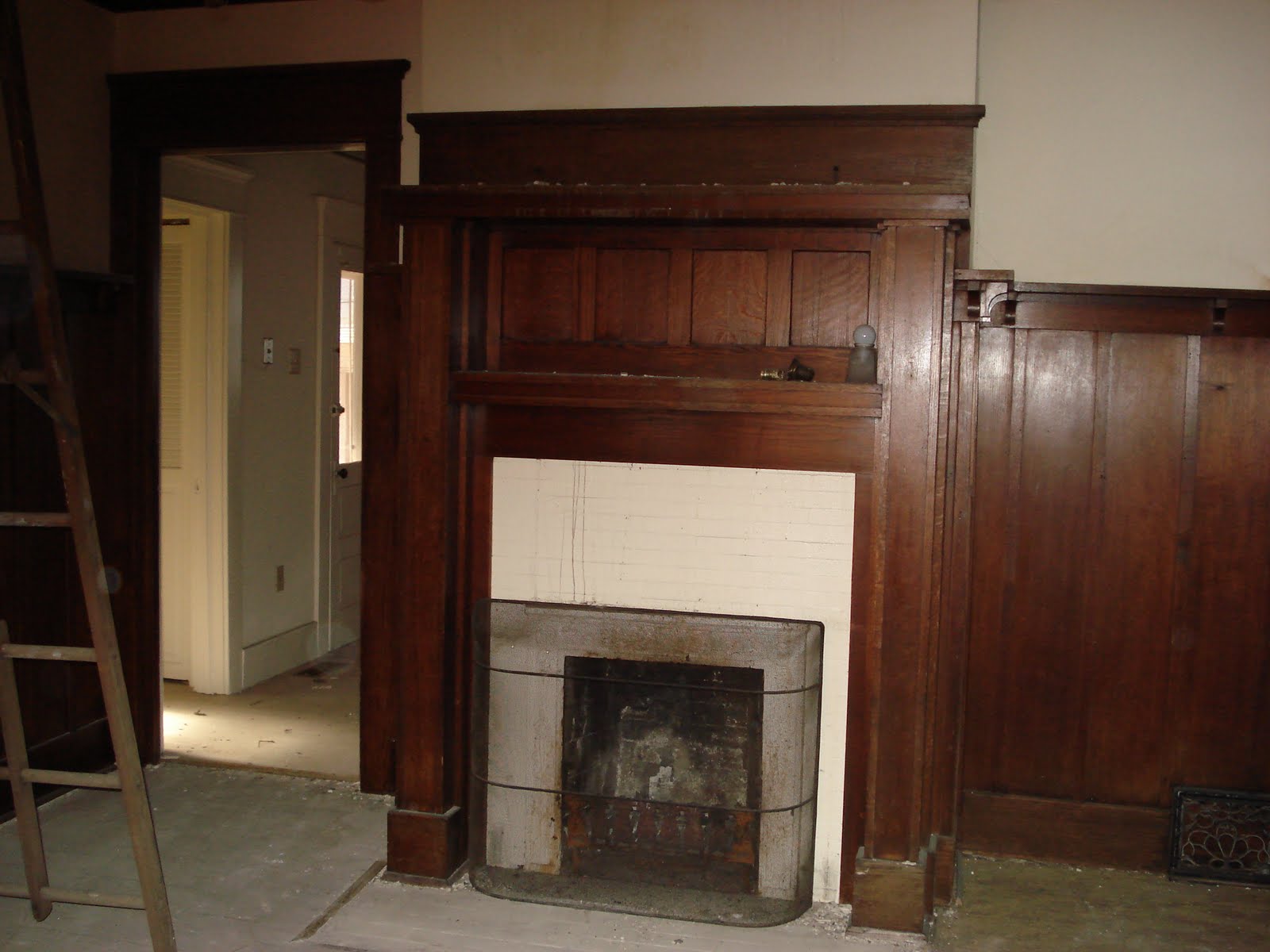
Today June 4th I was returning from a walk in Washington Park by way of Fayette. The owner doing all the restoration of the bungalow was outside mowing the grass. I got my wish from yesterday and got to see the inside of the house. Here are some photos that show the back breaking work the new owner is doing.
The NEW dining room ceiling!
Fabulous panelling well cared for!
Front room going into dining room shows the gem this house is!
The window seat on the stairwell landing.
Going up the stairs to the second floor. What detail!
It is experiences like this that make me want to write this blog. Where else but in the West Side Neighborhood Association could you find such a beautiful house and such care labored upon it? This is a treasure that is not obtainable in a new house. The restoration of one home on a street leads to others putting much more care and attention into theirs. That is evident on Fayette Avenue.
Dubois School site has an interesting history
Sangamon County Fairgrounds are in Pink (later became Camp Yates) Click on map tp enlarge
The original boundaries of the city of Springfield were all Grand avenue streets (North Grand, South Grand, West Grand (now MacArthur) and East Grand (now Martin Luther King Drive). Andrew Laswell (1781-1853) came to Sangamon County in 1824 and settled one mile west of the city center - just west of MacArthur. Through a land grant from President John Quincy Adams, Laswell owned most of what it now the near west side. In 1852 the Sangamon County Agricultural Society was formed and purchased land from Andrew Laswell. The land eventually became the Sangamon County Fairgrounds (in pink in the picture above) and encompassed an area bounded by Washington Street to Governor between Lincoln and Douglas Streets.
Since agriculture was the mainstay of the economy, the county fair was well attended. The 1860 Illinois State Journal described the setting:
On entering, every step gives fresh evidence of the beauty of situation and tastefulness of design of the grounds of the Association, equaling in some respects even those of the St. Louis Agricultural Society and, far surpassing that of the late State Fair at Jacksonville. The passing and repassing of gaily dressed people among the shady and cool retreats; the subdued hum of conversation, the massing of highly mettled steeds, the lowing of stock, the thrilling strains of a neighboring Brass Band, all combined to produce highly interesting and agreeable effect.” (Illinois State Journal, 1860)
There was also a strong element of entertainment with horse racing probably being the greatest draw. Here is what was scheduled for September 20th and 21st:
In April 1861, Springfield began to arrange military accommodations for troops to be trained. The Sangamon County Agricultural Fairgrounds was transformed into a military campground. By Friday April 19th, large groups of troops began to arrive in Springfield via the railroad. The following newspaper article illustrates the scene taking place in the city that day:

Plaque on Dubois Wall
As more and more troops continued to train at Camp Yates, some of the men found an excess of time on their hands - enough to get into trouble.
It was time for change. On June 15, 1861 Ulysses S. Grant arrived in Springfield and accepted the colonelcy of the 21st District Regiment. Thus Col. Grant started his Civil War career and began restoring order to the camp. The stone below is near the front door of Dubois school.
Outside Dubois School
Grant lived in a one story home at the corner of Governor and Lincoln ( original site is marked in blue on the map above). There is an obelisk at the site (which is now a backyard)
The home he resided in has since been moved to 119 South Walnut.
119 S. Walnut
When Grant's Regiment was mobilized Camp Yates was closed and Camp Butler was created. When driving by Dubois today one can only speculate on the activities of the soldiers and fair goers.
Labels:
Civil War,
civil war veterans,
encampment,
U.S. Grant
Sunday, May 23, 2010
Cemetery at the corner of English Ave and MacArthur Blvd.?
Laswell Cemetery
At the northeast corner of English Avenue and Monroe Street there was a small family cemetery. The cemetery was for the family of Andrew Laswell who was an early settler and the original owner of most of the land west of what is MacArthur Avenue today. The first home was built on this block in 1912 or 1913. All of the surrounding blocks had homes built on them by then. In Oak Ridge Cemetery there is a large stone which bears the following inscription:
1832 --- 1911
In Memory of Andrew Lasswell (sic) and his wife Nancy Wright
and others buried in Laswell (sic) Burying Grounds formerly
located at the corner of Monroe St. and English Ave.
At the northeast corner of English Avenue and Monroe Street there was a small family cemetery. The cemetery was for the family of Andrew Laswell who was an early settler and the original owner of most of the land west of what is MacArthur Avenue today. The first home was built on this block in 1912 or 1913. All of the surrounding blocks had homes built on them by then. In Oak Ridge Cemetery there is a large stone which bears the following inscription:
1832 --- 1911
In Memory of Andrew Lasswell (sic) and his wife Nancy Wright
and others buried in Laswell (sic) Burying Grounds formerly
located at the corner of Monroe St. and English Ave.
Stone in Oak Ridge
Sunday, April 18, 2010
A personal note about the Westside Neighborhood
My step-daughter Carly was married on Saturday and my husband and I had her chihuahua (Gotti) stay with us during the last days of wedding preparations.. He started puppy life here at our house and we consider him an Historic Westside neighborhood resident. My husband actually mentioned in his wedding toast how living close to MacArthur had a big impact on Carly's life, her job (as a Social worker at Butler School) and her wedding (at the Southside Christian Church). Gotti, the chihuahua is off to live in Chatham with Carly and her husband Cal Thomas. I took a photograph of Carly and Gotti today as he leaves to be a full-time Chatham resident. I am thrilled that the background shows the wonderful bungalow architecture of our Historic Westside Neighborhood. He loved looking out our windows and being part of the activity in the Historic Westside Neighborhood.
Friday, April 9, 2010
The 1910 Sears Roebuck Agricultural Exhibit at the State Fair
Click on image below to enlarge:
In 1910 Sears Roebuck built an exhibit of their agricultural products and catalog house goods for the Illinois State Fair. On top of a pavilion, Sears featured a catalog house that was called the Avondale. The house was open for tours and, of course was decorated with items that could be purchased from their mail-order catalog.
Here is a postcard showing what the house would look like on the ground:
The exhibit continued for many years and it is unknown when the house was removed from the pavilion. No records exist at Sears or in the files of the Illinois State Fair Museum. The house has become the residence of the fair manager and is still there today.
Here's an ad about this particular house design:
Floorplan of the house
Here is a postcard showing the interior of the home:
Dining Room Lamp as advertised in Building Materials catalog (Click on images to enlarge)
China Cabinet shown in Dinig Room
Subscribe to:
Posts (Atom)